Best Place To Buy Kratom Powder is here at ICE420. Kratom powder a herbal product consisting of the dried and finely ground leaves of Mitragyna speciosa, a tropical evergreen tree in the coffee family (Rubiaceae). The tree is native to Southeast Asia primarily Indonesia, Thailand, Malaysia, Myanmar, and Papua New Guinea where it has been used for centuries in traditional herbal practices. Here to order Kratom Powder.
Kratom powder is the most common commercial form worldwide. The leaves are harvested, dried (the method and maturity of the leaf determine the final color and reported effects), and ground into a fine, earthy-tasting powder that ranges from bright green to reddish-brown depending on the “strain” (white, green, or red vein).
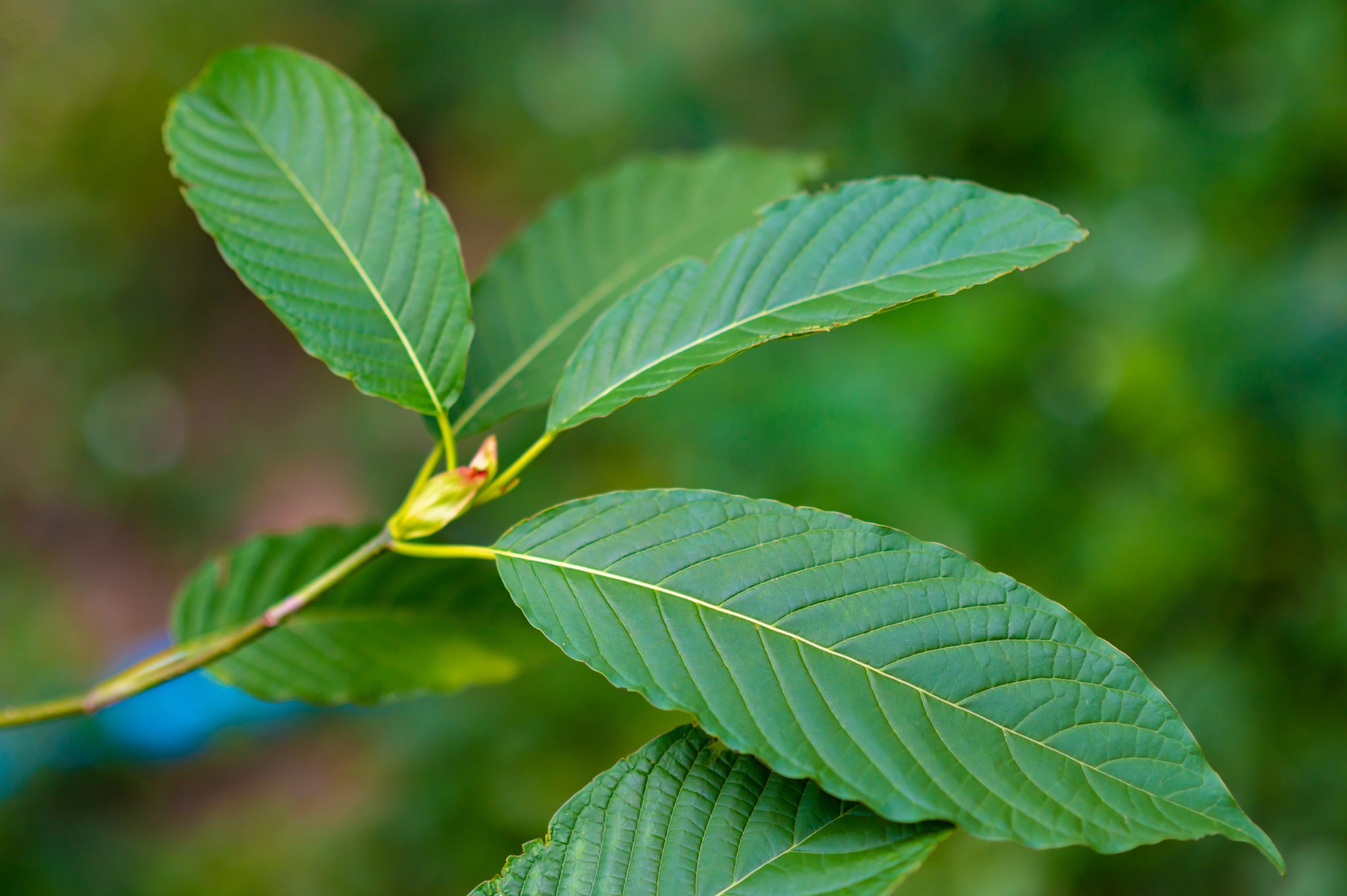
(Above: Close-up of Mitragyna speciosa leaves on the tree the source of all kratom products)
Composition & Active Compounds | Best Place To Buy Kratom Powder
Kratom leaves contain over 50 alkaloids. The two primary psychoactive compounds are:
- Mitragynine the most abundant (typically 12–66% of total alkaloids).
- 7-Hydroxymitragynine (7-OH) present in trace amounts (<2% in natural leaves) but far more potent at opioid receptors.
Other minor alkaloids and compounds contribute to the overall profile. Concentrated extracts and synthetic 7-OH products are significantly stronger and carry higher risks.

(Above: Chemical structure of mitragynine, the main alkaloid in kratom)
Traditional & Reported Uses
In its native regions, fresh leaves or tea have long been used by laborers to reduce fatigue, increase energy and productivity, relieve minor pain, treat diarrhea or cough, and occasionally as a mild substitute during opioid withdrawal. In modern contexts outside Southeast Asia, users self-report using kratom powder for chronic pain, anxiety, mood support, fatigue, and opioid withdrawal management.
Important: No form of kratom or its alkaloids has been approved by the U.S. FDA (or equivalent major regulatory bodies) for any medical condition. Claims of therapeutic benefit remain unproven in large-scale clinical trials.
How It Works (Mechanism of Action)
Mitragynine and 7-OH act as partial agonists at mu-opioid receptors (explaining the opioid-like effects at higher doses) while also interacting with adrenergic, serotonergic, and dopaminergic systems. This produces a dose-dependent, biphasic profile:
- Low doses → predominantly stimulant effects.
- Higher doses → predominantly sedative and analgesic effects.
Unlike full opioid agonists (e.g., morphine), kratom alkaloids show functional selectivity that may reduce some classic opioid side effects such as severe respiratory depression though serious risks still exist, especially with high-potency products or combinations.
Effects by Dose (Typical Oral Powder)
- Low dose (1–5 g): Increased alertness, physical energy, sociability, mild mood lift (stimulant-like).
- Moderate dose (5–10 g): Pain relief, relaxation, mild euphoria, reduced anxiety.
- High dose (10–15+ g): Strong sedation, significant pain relief, drowsiness (can become unpleasant for some users).
Onset is usually 10–30 minutes; effects last 2–6 hours depending on dose, individual metabolism, and whether taken on an empty stomach.
Pharmacokinetics
- Absorption: Rapid from the gastrointestinal tract.
- Metabolism: Primarily in the liver via CYP enzymes (notably CYP3A4, CYP2D6).
- Elimination half-life: Highly variable (mitragynine ~3–24 hours; can accumulate with frequent use).
- Excretion: Mainly via urine and feces.
Side Effects & Serious Risks
Common side effects (especially at higher doses or with regular use):
- Nausea, vomiting, constipation, loss of appetite
- Dizziness, drowsiness, dry mouth, itching, sweating
- Increased urination
Serious risks (documented in case reports and health authority data):
- Liver toxicity (hepatotoxicity, cholestasis, elevated enzymes sometimes requiring hospitalization)
- Seizures
- Elevated heart rate and blood pressure
- Respiratory depression (especially when combined with alcohol, benzodiazepines, opioids, or other sedatives)
- Psychiatric effects (agitation, hallucinations, psychosis in susceptible individuals)
- Contamination (Salmonella, heavy metals) and adulteration in unregulated products
Deaths have been reported, but the vast majority involved poly-substance use or highly concentrated extracts rather than plain leaf powder alone. Neonatal abstinence syndrome has occurred in infants born to regular users.
Dependence, Tolerance & Withdrawal
Regular daily use (especially moderate-to-high doses) can lead to tolerance within weeks, physical dependence, and substance use disorder in a subset of users. Withdrawal symptoms are opioid-like but generally milder: anxiety, insomnia, muscle aches, irritability, runny nose, cravings, and restlessness. They typically peak in 2–3 days and can last up to a week or longer in heavy users.
Abuse Potential & Product Concerns
Kratom has moderate abuse potential, particularly the more potent extracts and 7-OH-enhanced products. The unregulated market means variable alkaloid content, possible adulteration, and contamination risks. As of 2025–2026, regulatory agencies have focused heavily on concentrated 7-OH products due to their stronger opioid-like potency and emerging adverse-event reports.
Legal & Regulatory Status (as of February 2026)
- Global: Highly variable. Controlled or banned in countries such as Australia, Malaysia, Japan, and several EU nations. Regulated or allowed for traditional/medical use in Thailand and legal for export from Indonesia under new frameworks. Not listed under UN international drug conventions.
- United States: Not scheduled at the federal level by the DEA. However, the FDA states kratom is not lawfully marketed as a dietary supplement, conventional food, or drug product. Import alerts are in place, and marketing claims are prohibited. Banned outright in several states (Alabama, Arkansas, Indiana, Rhode Island, Vermont, Wisconsin, and others with recent 2025–2026 restrictions). Concentrated 7-OH products face additional federal and state enforcement.
- Cameroon: No specific national prohibition on Mitragyna speciosa or kratom powder appears in major international databases or regulatory summaries. As an imported botanical product with psychoactive properties, it would likely fall under the Ministry of Public Health’s regulations for herbal medicines, food supplements, or pharmaceuticals, as well as customs/import controls. Unauthorized sale, advertising, or distribution for human consumption may violate consumer protection or health laws. Always verify the current legal status directly with Cameroonian authorities (e.g., Ministry of Public Health or customs in Douala) before any possession, purchase, or use, as local enforcement and interpretations can differ.
Important Medical Disclaimer
This overview is provided strictly for educational and informational purposes only and is based on publicly available pharmacological data, regulatory statements (FDA, NIDA, DEA), peer-reviewed literature, and official sources as of February 2026. It is not medical advice, does not encourage or endorse the use of kratom in any form, and does not replace professional healthcare guidance.
Kratom carries documented risks of serious harm, dependence, drug interactions, and unpredictable effects due to lack of standardization. It should never be used by pregnant or breastfeeding individuals, people with liver disease, mental health conditions, or those taking other medications without direct medical supervision.
If you are experiencing pain, anxiety, fatigue, opioid-related issues, or any health concern, please consult a licensed physician or pharmacist in Cameroon for safe, regulated, evidence-based treatment options. For substance-use support, contact local public health services or addiction helplines.
Sources include: FDA.gov (Kratom & 7-OH pages, 2025 updates), NIDA.nih.gov, DEA fact sheets, NCBI/StatPearls reviews, Mayo Clinic, Wikipedia botanical summary (updated citations through early 2026), and peer-reviewed pharmacological studies on Mitragyna speciosa.
For any personal health questions, always seek qualified local medical advice. Best Place To Buy Kratom Powder